Our Services
X-Ray
Ultrasound
Ultrasound
X-rays use a very small, targeted dose of radiation to create images based on the different densities of your body's structures — making them the fastest and most reliable way to assess bones, joints, and the chest.
Our newly upgraded digital radiography room produces sharper images with lower radiation doses, and results are available to
X-rays use a very small, targeted dose of radiation to create images based on the different densities of your body's structures — making them the fastest and most reliable way to assess bones, joints, and the chest.
Our newly upgraded digital radiography room produces sharper images with lower radiation doses, and results are available to your radiologist immediately. Most X-ray exams take just a few minutes.
Common exams include chest, spine, shoulder, arm, hand, hip, knee, ankle, and foot X-rays.
No preparation and no appointment needed — walk in with your requisition and we'll take care of the rest, subject to daily availability.
Ultrasound
Ultrasound
Ultrasound
Ultrasound uses high-frequency sound waves to create real-time images of the organs, tissues, and blood vessels inside your body. It's completely painless, uses no radiation, and requires no recovery time — which makes it one of the safest and most versatile tools in diagnostic imaging.
A handheld device called a transducer is moved gently
Ultrasound uses high-frequency sound waves to create real-time images of the organs, tissues, and blood vessels inside your body. It's completely painless, uses no radiation, and requires no recovery time — which makes it one of the safest and most versatile tools in diagnostic imaging.
A handheld device called a transducer is moved gently across the skin with a water-based gel. The echoes returning from inside your body are converted into detailed images that your radiologist reviews and reports to your doctor.
Some exams require preparation, such as fasting or arriving with a full bladder. When you book, we'll tell you exactly what to do so nothing delays your appointment.
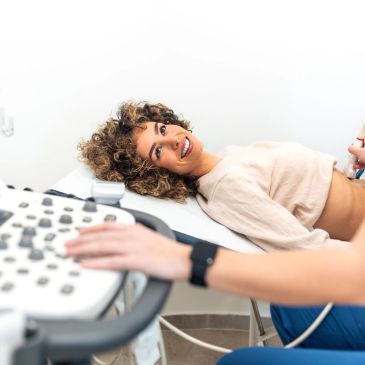
Abdominal & Pelvic Ultrasound
Abdominal & Pelvic Ultrasound
Abdominal & Pelvic Ultrasound
Abdominal ultrasound examines the liver, gallbladder, pancreas, spleen, kidneys, and major blood vessels — often ordered to investigate abdominal pain, gallstones, or abnormal blood work.
Pelvic ultrasound looks at the uterus, ovaries, and bladder in women, and the bladder and prostate in men. It can be performed externally, or transvagina
Abdominal ultrasound examines the liver, gallbladder, pancreas, spleen, kidneys, and major blood vessels — often ordered to investigate abdominal pain, gallstones, or abnormal blood work.
Pelvic ultrasound looks at the uterus, ovaries, and bladder in women, and the bladder and prostate in men. It can be performed externally, or transvaginally for a clearer view when your doctor requests it.
Both exams usually require preparation — abdominal scans typically need fasting, and pelvic scans often need a full bladder. We'll give you clear instructions when you book. Female sonographers are available daily for pelvic and transvaginal exams.
Musculoskeletal (MSK) Ultrasound
Abdominal & Pelvic Ultrasound
Abdominal & Pelvic Ultrasound
Musculoskeletal ultrasound gives a detailed, real-time look at muscles, tendons, ligaments, joints, and soft tissue — making it especially useful for sports injuries, repetitive strain, and orthopedic assessment.
Because the images are live, we can examine a joint while you move it, revealing problems a static image might miss. Common refe
Musculoskeletal ultrasound gives a detailed, real-time look at muscles, tendons, ligaments, joints, and soft tissue — making it especially useful for sports injuries, repetitive strain, and orthopedic assessment.
Because the images are live, we can examine a joint while you move it, revealing problems a static image might miss. Common referrals include shoulder and rotator cuff pain, tennis and golfer's elbow, wrist and hand injuries, hip and groin pain, knee injuries, Achilles tendon problems, and plantar fasciitis.
There's no preparation required, and no radiation. We work regularly with sports medicine physicians, physiotherapists, and orthopedic specialists across the east end.

Pediatric Ultrasound
Soft Tissue Ultrasound ("Lumps and Bumps")
Soft Tissue Ultrasound ("Lumps and Bumps")
We image infants and children regularly, and we know that a calm, unhurried visit makes all the difference. Our team takes the time to explain what's happening and to keep young patients comfortable throughout.
Common pediatric exams include infant hip ultrasound (for developmental dysplasia), infant spine and head ultrasound, abdominal an
We image infants and children regularly, and we know that a calm, unhurried visit makes all the difference. Our team takes the time to explain what's happening and to keep young patients comfortable throughout.
Common pediatric exams include infant hip ultrasound (for developmental dysplasia), infant spine and head ultrasound, abdominal and kidney scans, and soft tissue assessment.
Ultrasound is safe for children of any age and uses no radiation. One parent or care provider is welcome to stay with your child for the entire exam.
Soft Tissue Ultrasound ("Lumps and Bumps")
Soft Tissue Ultrasound ("Lumps and Bumps")
Soft Tissue Ultrasound ("Lumps and Bumps")
If you or your doctor have found a lump, swelling, or area of concern just under the skin, ultrasound is often the first and fastest way to look at it. We can assess cysts, lipomas, hernias, abscesses, and other soft tissue findings, and provide your doctor with a clear report to guide next steps.
The scan is quick and painless, and no preparation is needed.
Breast Ultrasound
Prostate Ultrasound
Prostate Ultrasound
Breast ultrasound is used to evaluate a lump, an area of concern, or a finding from another exam, and to distinguish between fluid-filled cysts and solid masses. It uses no radiation and is often used alongside mammography, particularly for patients with dense breast tissue.
Female sonographers are available daily. We know this can be an a
Breast ultrasound is used to evaluate a lump, an area of concern, or a finding from another exam, and to distinguish between fluid-filled cysts and solid masses. It uses no radiation and is often used alongside mammography, particularly for patients with dense breast tissue.
Female sonographers are available daily. We know this can be an anxious appointment, and our team will take care to keep you comfortable and informed.
Prostate Ultrasound
Prostate Ultrasound
Prostate Ultrasound
Prostate ultrasound assesses the size and structure of the prostate gland, and is commonly ordered to investigate urinary symptoms, an elevated PSA, or an abnormal exam finding. Depending on your doctor's requisition, the scan may be performed abdominally or transrectally.
We'll explain exactly what to expect before we begin and give you any preparation instructions when you book.